The History & Science of Halloween
From spooky to scientific; turning Halloween into a learning adventure!
You are currently wearing a skeleton. It is alive, it grows with you, and it is helping you read this without collapsing into a puddle. That’s way more impressive than the plastic one on the porch.
This is what I love about Halloween: look a little closer at the monsters and you find fascinating questions for kids and adults that are real learning opportunities. The history of flight hiding in a broomstick. A family conversation hiding in a howl. Thousands of years of history wrapped up in a mummy.
Halloween hands kids a whole season of things designed to feel a little scary: skeletons on porches, ghosts in windows, and monsters in every store aisle. That can be a reason to hide under the covers or a reason to get curious. Are mummies real? Why do wolves howl? Why would garlic scare off a vampire? For the grown-ups answering those questions, the real science and history is often better than the spooky version, and every answer can help your kids turn a little bit of fear into a whole lot of curiosity.
Your skeleton is alive and changing
Those bones inside you are living tissue. They are constantly being renewed and reshaped. They also protect some fairly important equipment: your skull protects your brain, and your ribs help protect your heart and lungs. Most adults have 206 bones. Babies start with about 270, then some join together as they grow. So growing up can mean getting bigger while having fewer bones.
Bodies are weird. In a good way.
And one hand, including the wrist, has 27 bones. Twenty-seven! Suddenly, all that finger-wiggling seems a little more impressive. Next time a dancing skeleton appears, try copying its moves. Which joints are doing the work? Which moves only work because it is a cartoon? There is a lot of anatomy hiding in a silly dance.
Magic dreamed of flying. Science did it.
Old stories had witches soaring across the moon on broomsticks. An ordinary kitchen broom can’t carry anyone into the sky, but the dream of flying was very real, and for thousands of years it stayed a dream. That changed in 1783. Two men climbed into the basket of a hot air balloon built by the Montgolfier brothers and floated over Paris for about 25 minutes, the first free flight to carry people. The trick was simple science: hot air is lighter than the cooler air around it, so a big enough bag of it rises and lifts whatever hangs below.
Then in 1903, Wilbur and Orville Wright flew the first powered airplane at Kitty Hawk, North Carolina. That first flight lasted just 12 seconds but made history. Just 66 years later, astronauts flew to the Moon. Magic dreamed it. Science did it.
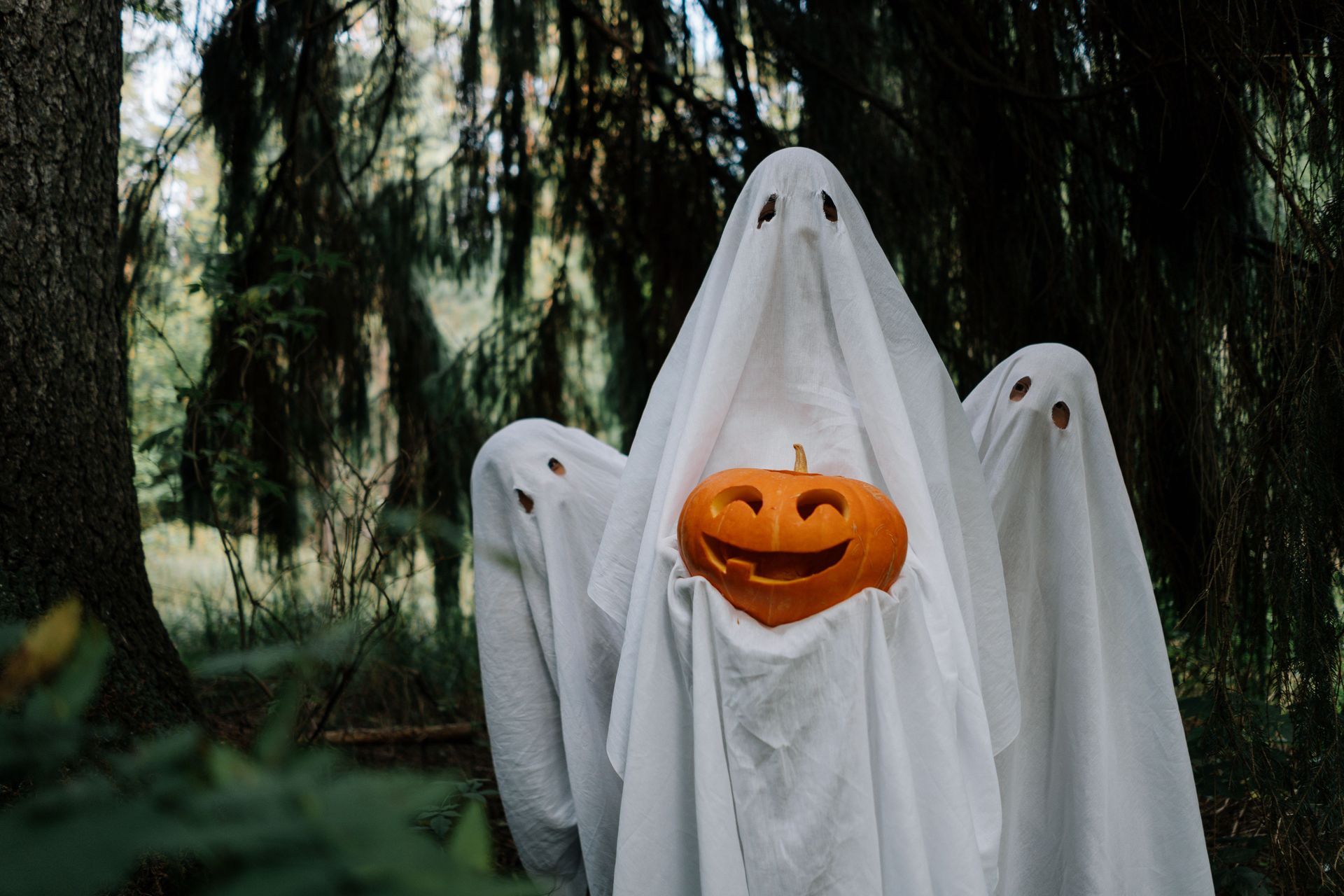
Poltergeists: noisy ghosts need a detective
A house goes BANG. Do you have a noisy ghost?
The word "poltergeist" comes from the German words "Poltern," which means "to make a racket," and "Geist," which means "spirit." So a poltergeist is a noisy ghost: the kind blamed for knocks, bangs, and objects that seem to move on their own.
The first thing to do with a suspected noisy ghost is investigate. Did the noise happen when the washing machine was running? Is a window open with a breeze that might have slammed a door shut?
Give a scared young ghost detective something useful to look for: a connection between the sound and something happening nearby. And if you still cannot explain a sound, “we don’t know yet” is ok also. Turning a scary noise into a mystery to solve is one of the fastest ways to shrink the fear.
Mummies removed the brain but kept the heart
Real mummies are the preserved remains of people who once lived in ancient cultures like Egypt. Studying them respectfully can tell us about their lives, their health, and the things their communities believed.
Ancient Egyptians associated the heart with thinking, memory, and moral character. Heart scarabs—beetle-shaped amulets—were connected with beliefs about the heart being judged after death. Your heart had a lot on its job description.
Here is the gross part some kids love. To make a mummy, embalmers pulled the brain out through the nose with a long hook and threw it away because they didn’t think it did anything important. But they usually left the heart inside because they believed it was what did the thinking and would be needed when the person was judged in the afterlife.
As a mom, I can relate. Since having kids, some days my brain feels like it has been pulled out through my nose, but my heart has never been bigger. Maybe the ancient Egyptians were onto something.
WOLVES ARE HOWLING TO THEIR PACK
The full moon gets excellent billing in werewolf stories. Real wolves have other wolves to talk to.
Wolves use howls to help locate separated pack members and warn other wolves away from their territory. A wild pack is usually a family: parents and their offspring. Researchers are still studying the many situations in which wolves howl.
So that eerie sound drifting through the woods could be part of a family keeping track of one another. Think of it as a very loud “Where is everybody?”—an analogy, of course, rather than a word-for-word wolf translation.
Listen to a real wolf recording together. What changes in the pitch or length of the sounds? Then invent your own family call. Someone will absolutely use it in the grocery store. Consider yourself warned.
Vampires may have been a reaction to unknown diseases
Why would garlic scare off a vampire? Long before Dracula, garlic was one of the world’s oldest medicines. Ancient Egyptians, Greeks, and Romans used it to treat all kinds of illnesses. Scientists now know that crushed garlic releases a compound called allicin, which can fight some germs. A plant that seemed to protect people from sickness made sense as protection from monsters too.
Some vampire stories grew out of a real disease.
In 1800s New England, tuberculosis, which people then called consumption, spread through families. One person after another grew pale, coughed, and seemed to waste away, as if something were draining their life. Nobody knew yet that a germ caused it, so some frightened families blamed vampires. In 1882, scientist Robert Koch discovered the germ behind tuberculosis, and the real culprit finally had a name.
Ask your kids: if you didn’t know germs existed, how would you explain why a whole family got sick?
FINDING WONDER IN THE UNKNOWN
Most monster stories started as creative ways to explain the unknown, especially when people were scared.
What is making that knocking sound? Could a person ever fly? Why did something bad happen? People filled the gaps with stories, and curious people kept asking until they found out more.
That is the habit worth building: noticing something strange and asking “How does that work?” instead of settling for “That’s just how it is” or “It must be a ghost.” A child who learns to be curious is a child who is less scared and more ready to learn.
So this October, when something goes bump in the night or your kids nervously ask whether ghosts are real, try answering with a question of your own: “What do you think? How could we find out?” Every time you do, a little fear shape-shifts into curiosity. That’s my favorite Halloween transformation of all.
About the author
Jema is a Nashville mom and the creator of Ellis Mo, a children’s music and education project that she makes with her five-year-old son, including a new album about his favorite Halloween monsters.

